
Simchat Torah
Jewish holiday concluding the annual Torah reading cycle.

שלמה רודד · CC BY 2.5
Simchat Torah (Hebrew: שִׂמְחַת תּוֹרָה; Ashkenazi: Simchas Torah), also spelled Simhat Torah, is a Jewish holiday that celebrates and marks the conclusion of the annual cycle of public Torah readings, and the beginning of a new cycle. Simchat Torah is a component of the Biblical Jewish holiday of Shemini Atzeret ("Eighth Day of Assembly"), which follows immediately after the festival of Sukkot in the month of Tishrei (occurring in September or October on the Gregorian calendar).
- name
- Simchat Torah
- type
- Jewish holiday
- part_of
- Shemini Atzeret
- month
- Tishrei (September–October Gregorian)
- observed_in
- Orthodox, Conservative, Reform, and other Jewish communities
- key_activities
- Dancing with Torah scrolls, seven hakafot, reading last parashah of Deuteronomy
Lore & Background
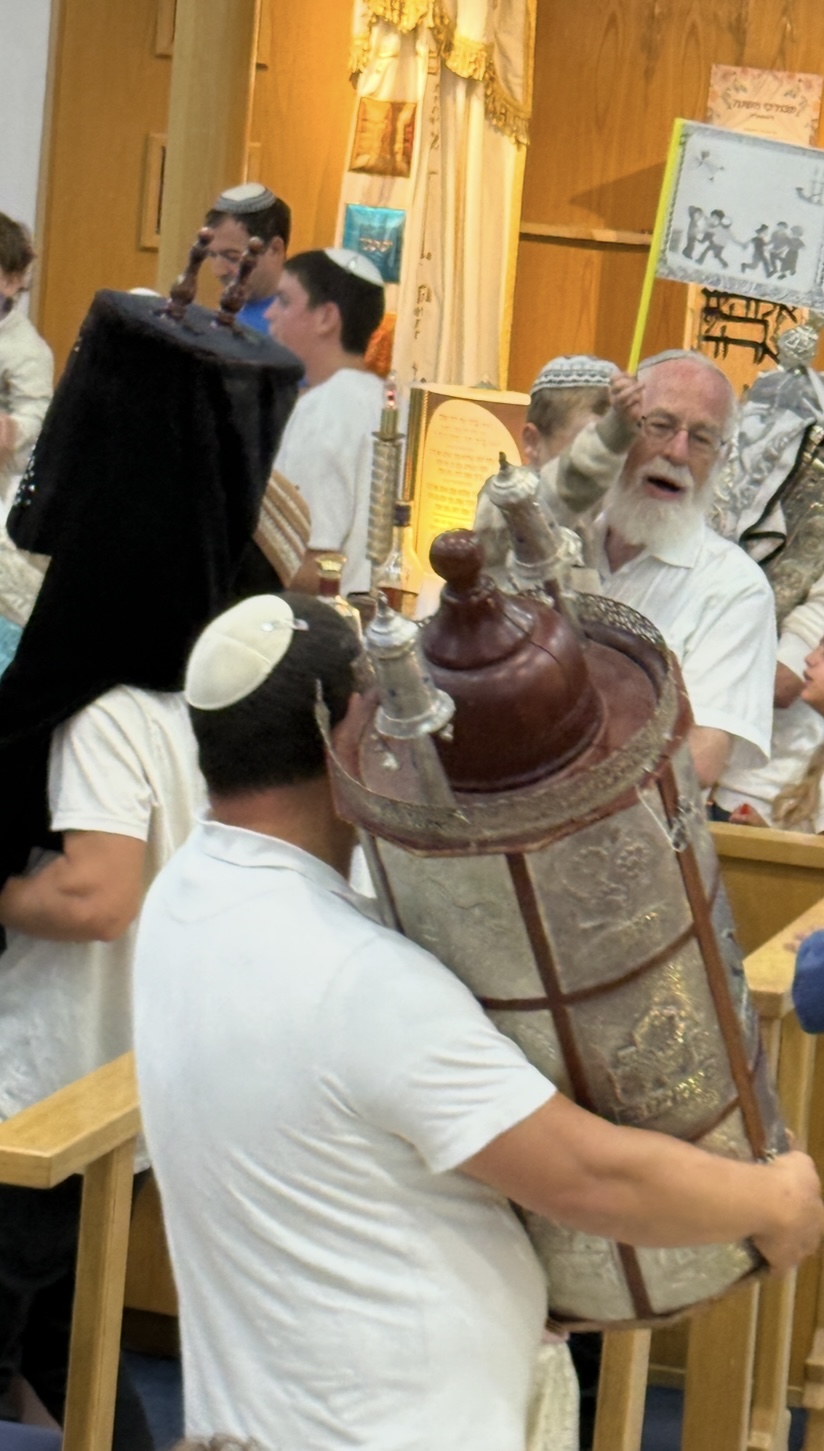
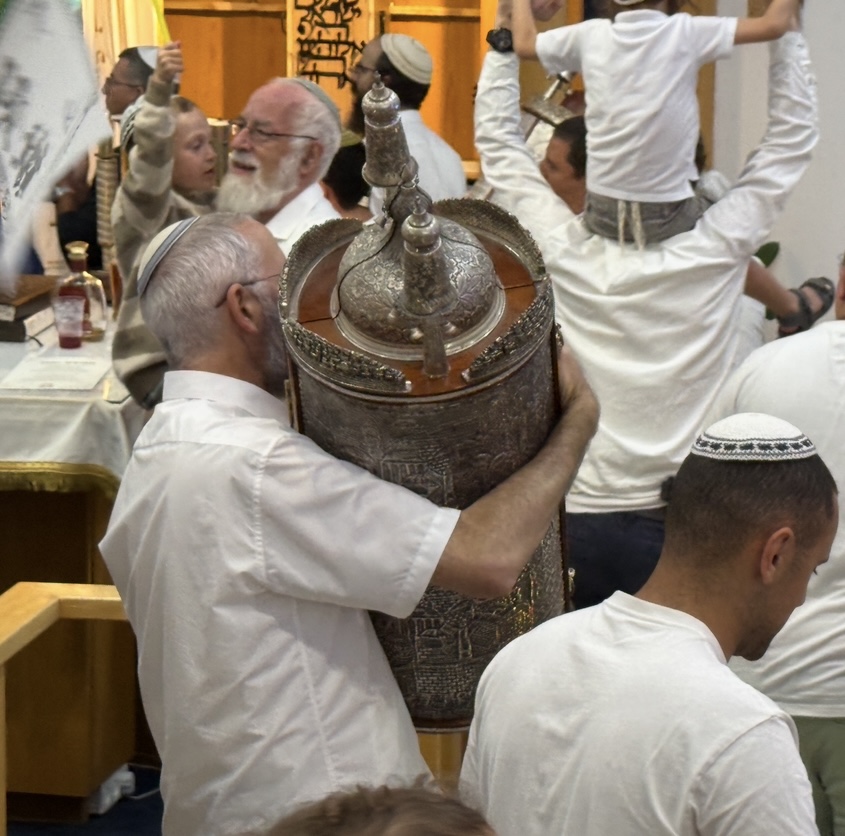
Simchat Torah's main celebration occurs in the synagogue during evening services. In many Orthodox as well as many Conservative congregations, this is the only time of year at which the Torah scrolls are taken out of the ark at night and are also read at night. In the morning, the last parashah of Deuteronomy and the first parashah of Genesis are read in the synagogue. On each occasion, when the ark is opened, the worshippers leave their seats to dance and sing with the Torah scrolls in a joyous celebration that lasts several hours. The morning service is also uniquely characterized by each member of the congregation being called up for an aliyah. There is also a special aliyah for children. The name Simhat Torah was not used until relatively recently. In the Talmud (Meg. 31b), it is called Shemini Atzeret. Modern customs of celebration and dancing arose in the early Rishonic period. Isaac ibn Ghayyat (1030–1089) writes in his Me'ah She'arim that he asked Hayy ben Sherira "about those whose wont is to remove the sefer Torah from its ark at the close of the holiday, and [Hayy] responded that this is not our practice ... but that local customs should not change." Joseph Colon Trabotto adds that ibn Ghayyat added that Hayy had also written, "Our habit is to dance [on the day after Sh'mini Atzeret] specifically, even many of the elders, when they make eulogies of the Torah, and this is permitted because it glorifies the Torah", a ruling affirmed by Moses Isserles (Darkhei Moshe). This places the custom of removing the scrolls from the ark and dancing in some locales into the 11th century.
Reader's Guide
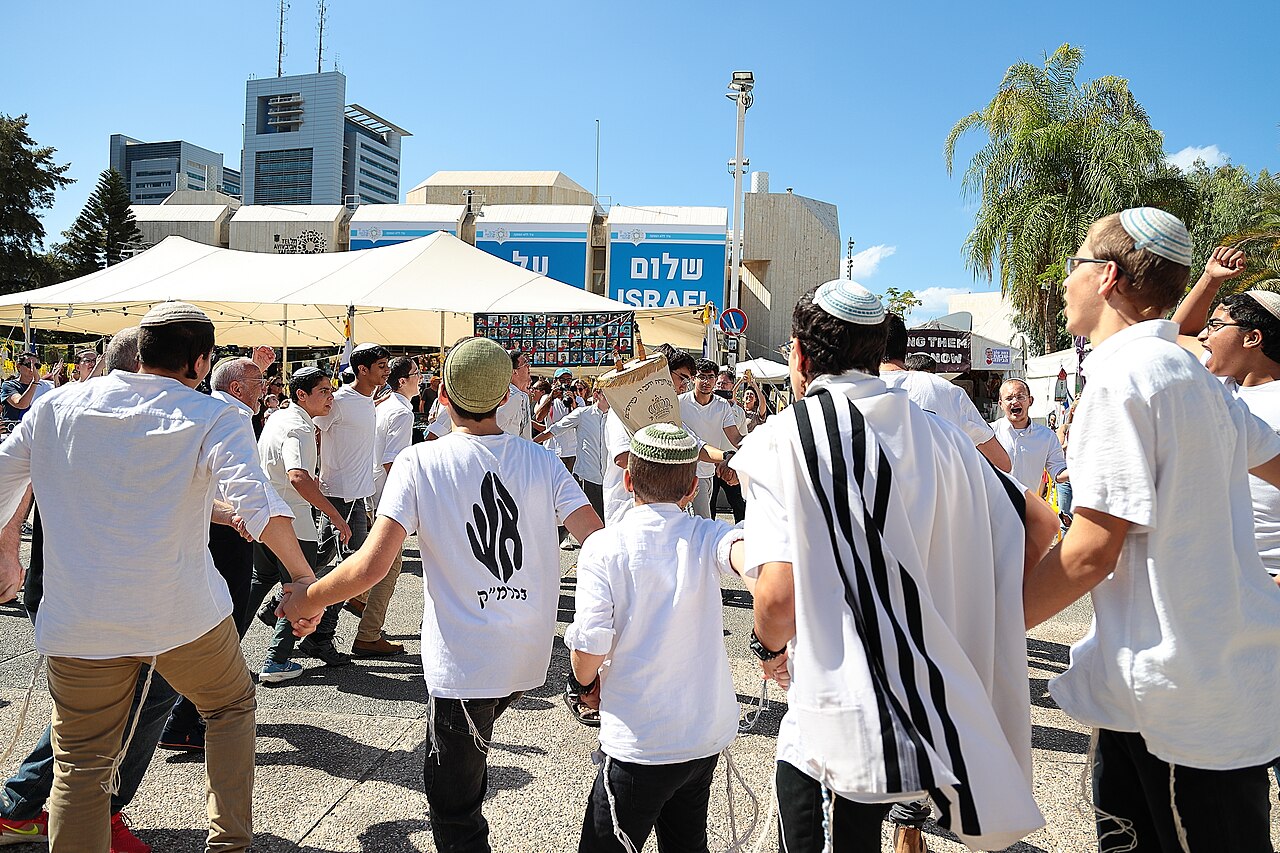
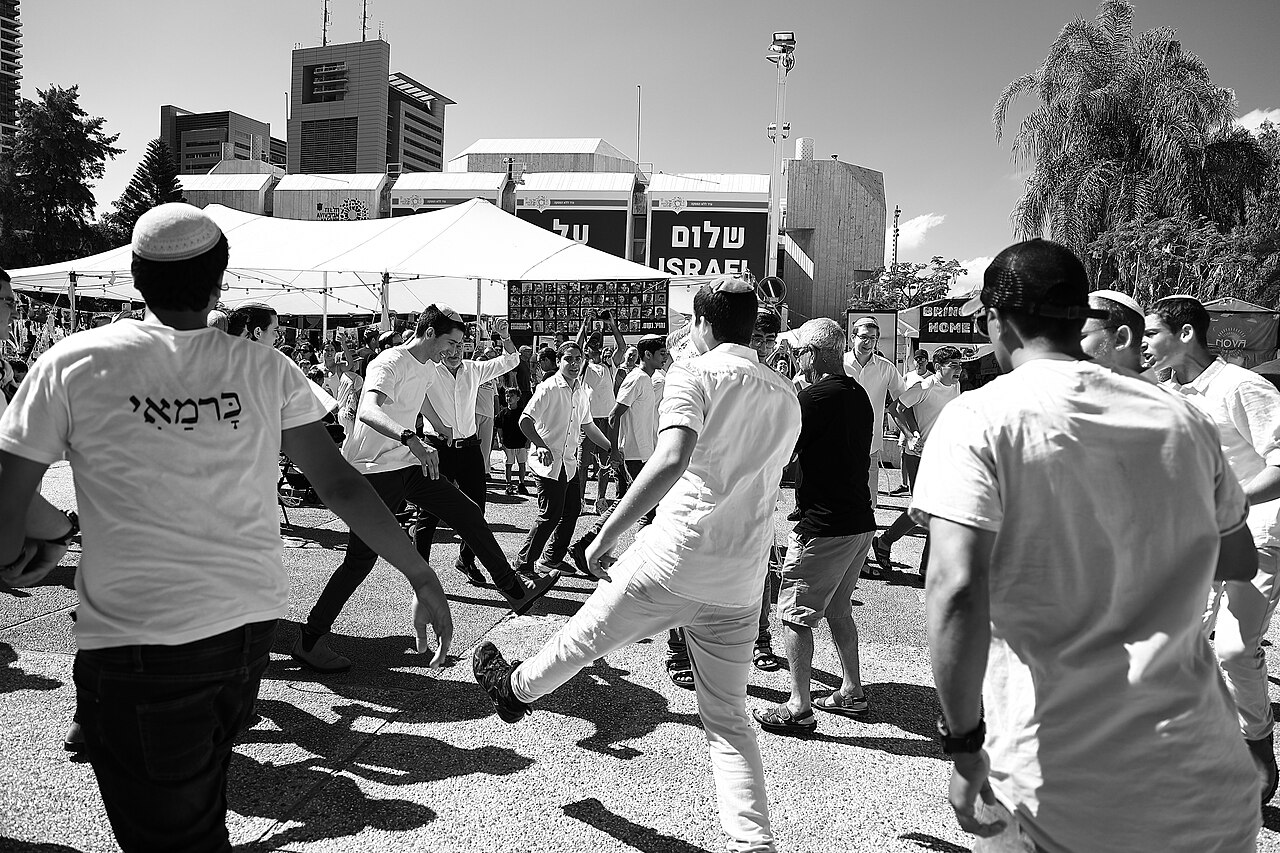
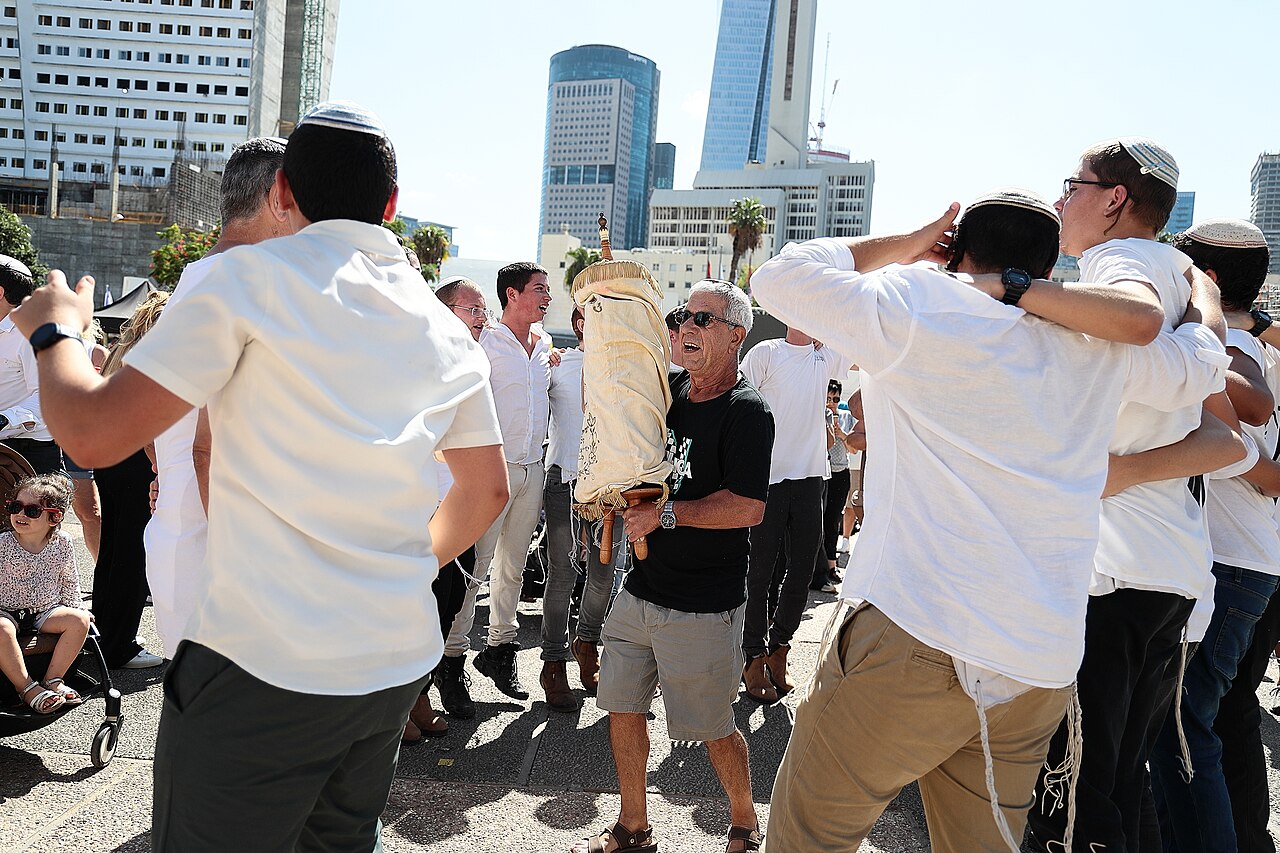
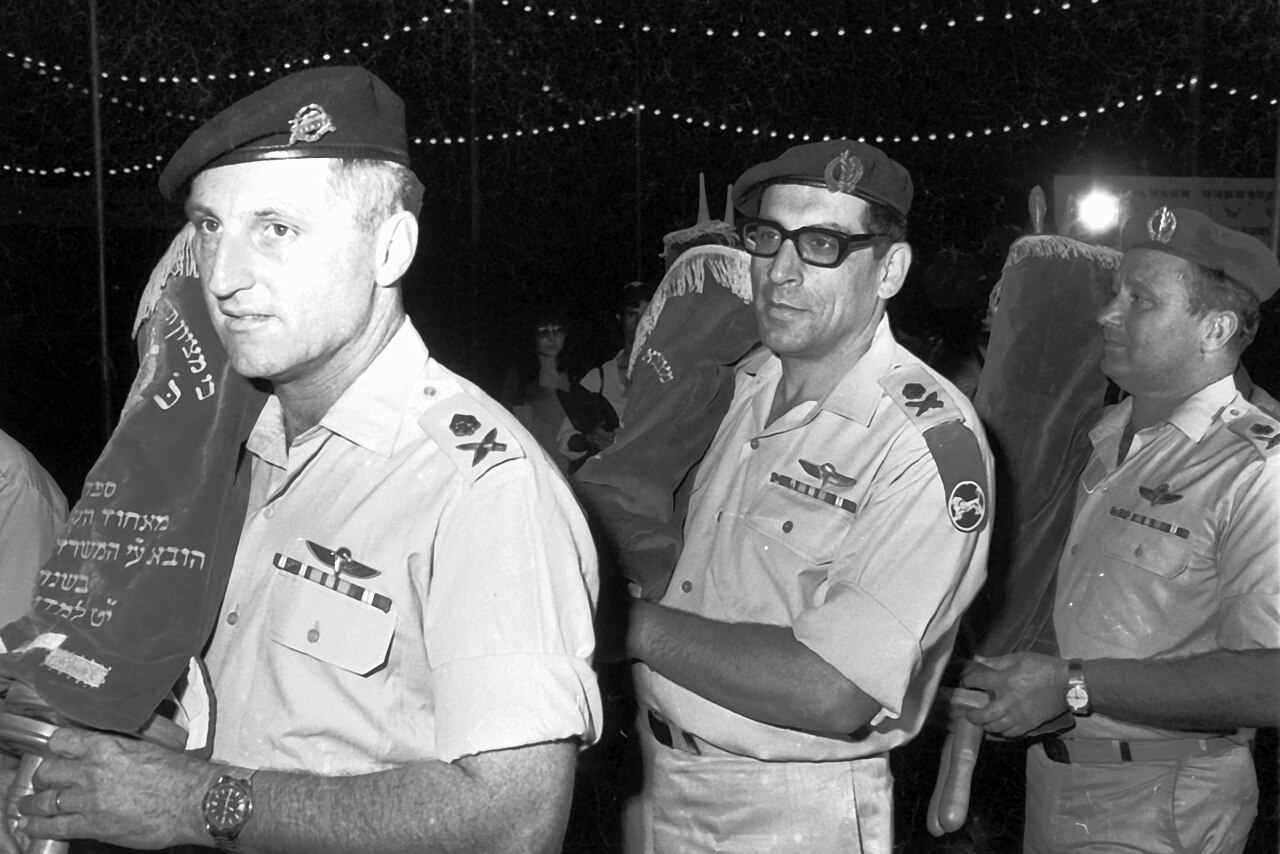
Simchat Torah's main celebration occurs in the synagogue during evening services. All the synagogue's Torah scrolls are removed from the ark and are carried around the sanctuary in a series of seven hakafot (circuits). Although each hakafa needs to encompass only one circuit around the synagogue, the dancing and singing with the Torah often continues much longer and may overflow onto the streets. In Orthodox and Conservative Jewish synagogues, each circuit is announced by a few melodious invocations imploring God to Hoshiah Na ("Save us") and ending with the refrain, Aneinu v'Yom Kor'einu ("[God] answer us on the day we call"). In Orthodox and Conservative synagogues, the hakafot are accompanied by traditional chants, including biblical and liturgical verses and songs about the Torah, the goodness of God (Mipi El is an example), Messianic yearnings, and prayers for the restoration of the House of David and of the Temple in Jerusalem. Children often receive flags, candies, and other treats. In Orthodox synagogues, men and boys predominate in the dancing; children (even young girls) may also dance with their fathers. Women and older girls often have dancing circles (sometimes with the Torah scrolls) or look on from the other side of a mechitza (partition), in accordance with the value of tzniut (modesty). In Conservative and Progressive congregations, men and women dance together. In some congregations, the Torah scrolls are carried out into the streets, and the dancing may continue far into the evening. After the hakafot, many congregations recite a portion of the last parashah of the Torah, V'Zot HaBerakhah ("This is the Blessing ...") in Deuteronomy. The part read is usually 33:1–34:12, but this may vary by individual synagogue custom, although Deuteronomy is never read to the end of the evening. In the morning, the last parashah of the Torah, V'Zot HaBerakhah, at the end of Deuteronomy (33:1–34:12), is read from the first scroll, followed immediately by the first chapter (and part of the second) of the Book of Genesis (1:1–2:3), which is read from the second scroll. It is a Jewish custom that a new beginning must immediately follow a completion; therefore, reading Gen. 1 immediately after finishing Deuteronomy is logical. It is a special honor to receive the last aliyah of the Book of Deuteronomy; the person receiving that aliyah is called the Hatan Torah (Torah Groom). Initially, Hotem Torah (Torah Completer), the term shifted in the medieval period and now signifies a titled honoree. By extension of this shift, the person who is called to begin Genesis is known as the Hatan Bereishit (Genesis Groom) and, in synagogues that allow women to receive an aliyah, the honorees are known as Kallat Torah (Torah Bride) and Kallat Bereishit (Genesis Bride). According to historical custom, still practiced in many congregations, these "grooms" are wealthy patrons of the synagogue who recognize the honor with special largesse; Modern Orthodox congregations generally choose Torah scholars instead. In many congregations, it is customary to call all eligible congregation members for an aliyah to the Torah on Simchat Torah. To accommodate this, the first five aliyot are reread so that everyone has an opportunity to recite the blessing. Another custom is to call all the children (in Orthodox congregations, boys only) to a special aliyah called Kol HaNe'arim ("all the children"). In many congregations, a large tallit is spread out over the heads of all the children as the blessing over the Torah is pronounced. The congregation blesses the children by reciting (in Hebrew) a verse from Jacob's blessing to Ephraim and Manasseh, Genesis 48:16. After the portion of Genesis is read, the Maftir, Numbers 29:35–30:1, is read from a third Torah scroll. The passage describes the prescribed offerings performed for the holiday. The haftarah (reading from the prophets) is the first section of the Book of Joshua.
Did You Know?
- In many Orthodox as well as many Conservative congregations, Simchat Torah is the only time of year at which the Torah scrolls are taken out of the ark at night and are also read at night.
- The name Simhat Torah was not used until relatively recently; in the Talmud (Meg. 31b), it is called Shemini Atzeret.
- The custom of removing the scrolls from the ark and dancing on Simchat Torah is placed in some locales into the 11th century, based on a response from Hayy ben Sherira cited by Isaac ibn Ghayyat (1030–1089).
- In Orthodox and Conservative communities outside Israel, Shemini Atzeret is a two-day holiday, and the Simchat Torah festivities are observed on the second day; in Israel, Shemini Atzeret and Simchat Torah are celebrated on the same day.
- The person receiving the last aliyah of Deuteronomy is called the Hatan Torah (Torah Groom), and the person called to begin Genesis is known as the Hatan Bereishit (Genesis Groom); in synagogues that allow women to receive an aliyah, the honorees are known as Kallat Torah (Torah Bride) and Kallat Bereishit (Genesis Bride).
The Seven Circuits of Evening Joy
The evening service is where Simchat Torah truly ignites. Every Torah scroll in the synagogue is drawn from the ark and carried around the sanctuary in a series of seven hakafot, or circuits. Although each hakafa technically requires only a single lap, the dancing and singing routinely stretches far beyond that minimum, sometimes spilling out onto the surrounding streets. In Orthodox and Conservative synagogues, each circuit is heralded by a few melodious invocations imploring God to save the people, closing with the refrain asking God to answer on the day of calling. Traditional chants fill the air—biblical verses, songs praising the Torah, expressions of Messianic longing, and prayers for the restoration of the House of David and the Temple in Jerusalem. Children are handed flags, candies, and other small treats. Once the circuits conclude, many congregations recite a portion of V'Zot HaBerakhah from Deuteronomy. The intensity of the dancing shifts with each congregation's temperament, yet the collective joy remains the defining feature of the night.
Closing One Book, Opening Another
The morning service carries a striking theological symbolism: the final parashah of Deuteronomy is read from one scroll, and immediately afterward the opening chapter of Genesis is read from a second, reflecting the Jewish principle that a fresh beginning must follow a completion. Three scrolls are used in total for the readings. Every member of the congregation is called up for an aliyah, a rarity in Jewish worship, and a special aliyah is reserved specifically for children. The individual who receives the last aliyah of Deuteronomy holds a particularly distinguished honor and is known as the Hatan Torah, or Torah Groom. The morning also includes a special holiday Amidah, the recitation of Hallel, and a holiday Mussaf service. When the ark is opened for the Torah reading, all scrolls are once again removed and the congregation repeats the seven hakafot, mirroring the evening's exuberant celebration.
A Holiday Woven into the Autumn Calendar
Simchat Torah is not a standalone observance but a component of Shemini Atzeret, the Eighth Day of Assembly, which follows immediately after the seven-day festival of Sukkot in the Hebrew month of Tishrei, landing in September or October on the Gregorian calendar. In Orthodox and Conservative communities outside Israel, Shemini Atzeret spans two days: the first is observed as Shemini Atzeret proper, and the second as Simchat Torah, though halakhically both days carry the name Shemini Atzeret, as the liturgy reflects. In Israel the two are merged into a single day, and Reform congregations abroad may follow that practice. Many Israeli communities observe Hakafot Shniyot, a second round of circuits on the evening after the holiday, a custom initiated by the former Chief Rabbi of Tel Aviv, Rabbi Yedidya Frankel. Some Hasidic communities perform hakafot on the eve of the first day, though no hakafot takes place on the first morning in any community outside Israel.
Who Dances, and When the Blessing Is Given
The texture of Simchat Torah participation varies considerably by denomination and community. In Orthodox synagogues, men and boys predominate in the dancing, with young children, including girls, often dancing alongside their fathers. Women and older girls may form their own dancing circles, sometimes with Torah scrolls, or observe from behind a mechitza, in keeping with the value of tzniut. In Conservative and Progressive congregations, men and women dance together, and in some communities the scrolls are carried into the streets for extended evening celebrations. A notable liturgical detail appears in many Eastern Ashkenazic communities: the Priestly Blessing is delivered during Shacharit rather than the later Musaf service. This adjustment traces back to a custom in which the Hatan Torah sponsored a kiddush featuring hard liquor during the service; since the Bible prohibits Kohanim from blessing while intoxicated, the blessing was moved earlier to eliminate any risk.
Gallery
Frequently Asked Questions
What is Simchat Torah?
Simchat Torah is a Jewish holiday dedicated to celebrating the wrap-up of the yearly public Torah reading cycle and the immediate kickoff of a fresh one. It takes place in the Hebrew month of Tishrei, which lands in September or October on the Gregorian calendar.
What happens during Simchat Torah celebrations?
The highlight is the community carrying the Torah scrolls in seven joyous circuits around the reading platform, a ritual known as the hakafot. Congregants also recite the closing section of Deuteronomy and then seamlessly begin the opening section of Genesis, signaling the cycle's renewal.
How does Simchat Torah fit with Shemini Atzeret?
Simchat Torah is woven into Shemini Atzeret, the single-day observance that comes right after the seven-day Sukkot festival. While Shemini Atzeret has its own prayers and themes, the exuberant Torah-centered festivities of Simchat Torah are layered onto the same day in most communities.
Which Jewish denominations observe Simchat Torah?
The holiday is celebrated across Orthodox, Conservative, Reform, and a wide range of other Jewish communities. The degree of formality and the specific customs can differ from one congregation to another, but the core spirit of joy and Torah celebration remains shared.
Why does Simchat Torah matter in the Jewish calendar?
It gives the community a dedicated moment to rejoice at having completed the entire Torah text in public reading. By immediately restarting with Genesis, the holiday reinforces the idea that Torah study is an endless, cyclical journey rather than a task with a finish line.
More in Public Holidays & Observances 25-28
Related in Public Holidays & Observances
Links follow this subject's own source article.
Elsewhere in the Public Holidays & Observances universe
Spotted an error? Know more?
This is a living reference — every entry is fact-audited, and reader corrections feed straight into our audit queue. Suggest an edit · See this site's audit record