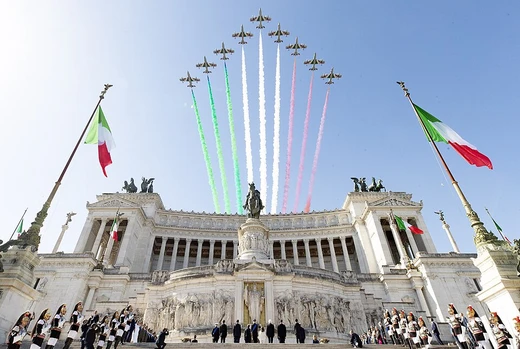
New Year's Eve
Last day of the Gregorian year, celebrated globally with diverse traditions.

Syced · CC0
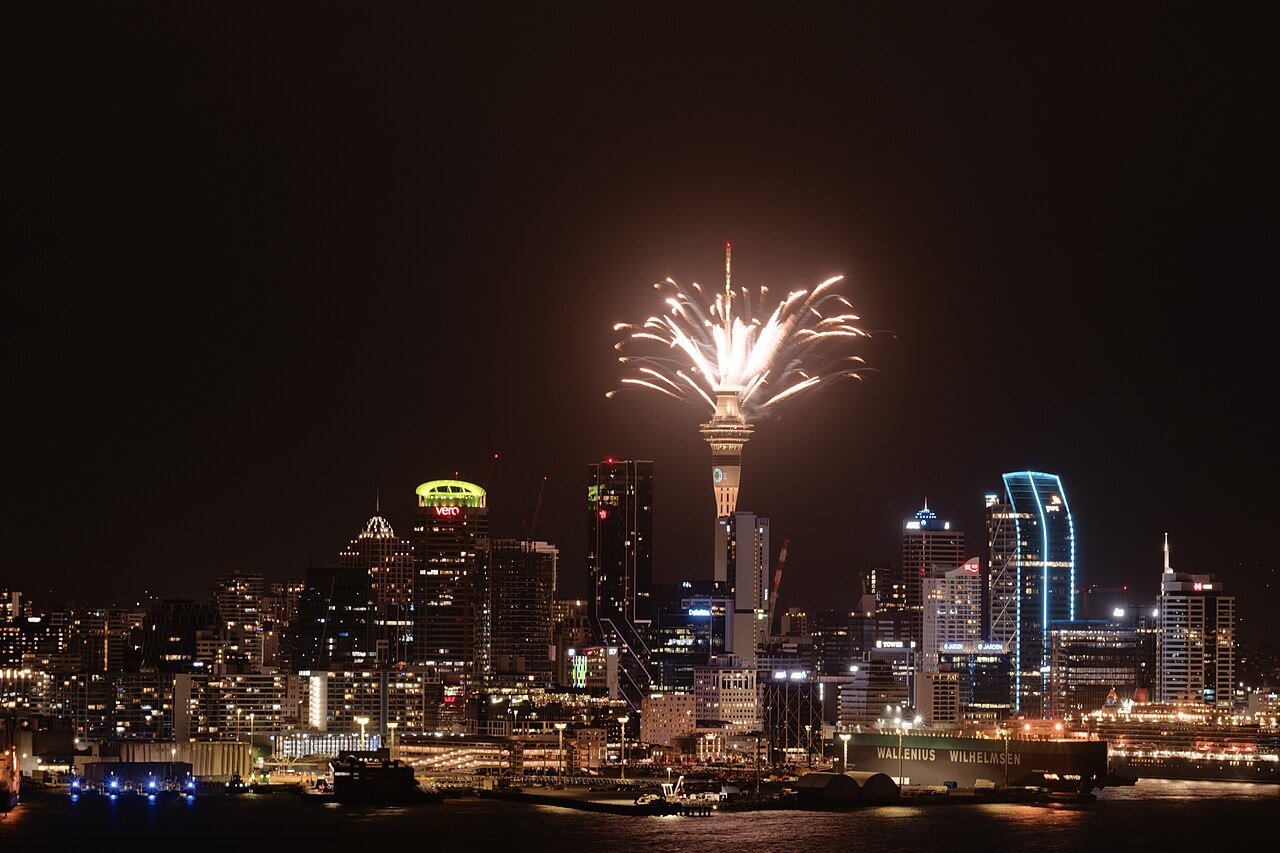
New Year's Eve in the Gregorian calendar refers to the evening—or commonly the entire day—of the last day of the year: 31 December. In many countries, New Year's Eve is celebrated with dancing, eating, drinking, and watching or lighting fireworks. Many Christians attend a watchnight service to mark the occasion. New Year's Eve celebrations generally continue into New Year's Day, 1 January, past midnight.
- First places to welcome
- Line Islands (Kiribati), Samoa, Tonga
Verified Timeline
Lore & Background
New Year's Eve is the evening or entire day of 31 December, the last day of the Gregorian year. The local time zone determines when the New Year begins; the first places to welcome it are west of the International Date Line: the Line Islands (part of Kiribati), Samoa and Tonga, in the Pacific Ocean. In contrast, American Samoa, Baker Island and Howland Island (part of the United States Minor Outlying Islands) are among the last. Celebrations often include dancing, eating, drinking, fireworks, and watchnight services for Christians, and they typically continue past midnight into 1 January.
Reader's Guide
New Year's Eve holds significance as a global transition point, marked by diverse regional customs. In Africa, countries like Algeria feature fireworks at the Martyrs' Memorial and a presidential message read on TV at 8 PM (AST), while in Ghana and Nigeria, church services and street parties are common. South Africa has a top ten music countdown voted on before 31 December, and Tunisia includes family dinners with roast chicken and the film 'Choufli Hal' broadcast every year. In Asia, Azerbaijan combines the holiday with International Solidarity Day of Azerbaijanis, and Bangladesh imposes restrictions on fireworks for safety. Hong Kong hosts a special edition of A Symphony of Lights with fireworks. India blends modern parties with traditional rituals. Israel observes it as Silvester, distinct from Rosh Hashanah, with social gatherings and a historical stigma due to its connection to Pope Sylvester I—who is widely considered to have been an antisemite. The holiday's legacy lies in its universal role as a moment of collective celebration and reflection, adapted to local cultures.
Did You Know?
- The first places to welcome the New Year are west of the International Date Line: the Line Islands (part of Kiribati), Samoa and Tonga.
- American Samoa, Baker Island and Howland Island (part of the United States Minor Outlying Islands) are among the last to welcome the New Year.
- In South Africa, a top ten music countdown is voted on before 31 December, and when the countdown reaches number one, the song plays on all the country's radio stations.
- In Tunisia, the popular film 'Choufli Hal' is broadcast every New Year's Eve, ending just minutes before the new year, and has become an annual tradition.
- In Israel, New Year's Eve is referred to as Silvester to distinguish it from the Jewish New Year, Rosh Hashanah, which falls in either September or October on the Gregorian calendar.
The Shifting Status of Chinese New Year's Eve
From roughly 2000 until the 2008 reform, the Spring Festival public holiday actually commenced on New Year's Day itself, leaving the eve to be treated as an ordinary working day. A policy shift in 2008 pulled the holiday start back by one day, so that the eve became the first day of the break. That arrangement lasted until 2013. Then, in 2014, the government reversed course once more, designating New Year's Eve as a regular working day. The decision ignited fierce backlash online, with netizens and academics mounting hostile criticism of what they perceived as a betrayal of family tradition. By 2015, the government effectively walked the policy back: the eve is now typically swapped with a nearby weekend, ensuring that most workers do not have to clock in on the night before the lunar new year. The episode illustrates how a single calendar day can become a flashpoint for debates over tradition, labor, and state authority.
The Weekend-Shifting Machinery
China's holiday system operates on a principle that confounds many outsiders: weekends are not fixed. Instead, the government routinely swaps Saturdays and Sundays with adjacent weekdays to manufacture longer continuous breaks. For the Spring Festival and National Day, nearby weekend days are pulled forward or pushed back to create a seven-day golden week, though the trade-off is that workers may face six or seven consecutive days of labor either before or after the holiday. If the holiday falls on a Wednesday, no shifting occurs and the break remains a single day, a deliberate choice made after 2014 to avoid seven-day work streaks. On Tuesdays or Thursdays, weekend days are shifted to produce a three-day break. When the holiday lands on a weekend, it simply transfers to Monday. The entire schedule is announced roughly a month before the year begins by the General Office of the State Council, yet it can still be adjusted mid-year, making China's holiday calendar one of the least predictable among developing nations.
From Qin Dynasties to Communist Calendars
The story of Chinese festivals stretches back to the Qin dynasty, roughly 221 to 206 BC, when communal celebrations first took recognizable form. By the Tang dynasty (618–907 AD), the character of these observances had shifted markedly: the earlier emphasis on ritual sacrifice and mystical ceremony gave way to a greater focus on entertainment and communal enjoyment. That trajectory of evolving celebration eventually collided with modern political history. Between the 1920s and the 1970s, Chinese citizens navigated a dual calendar—traditional festivals alongside a parallel set of official holidays that commemorated the achievements of the communist regime. The two systems coexisted for decades, creating a layered holiday landscape. This move signaled a partial return to cultural roots, acknowledging that the purely political holiday framework of the preceding era no longer resonated with a rapidly modernizing population.
The Regulatory Labyrinth
Behind the seemingly simple question of when citizens get off work lies an intricate web of administrative regulation. The current statutory annual holiday standard stands at thirteen days, distributed across seven official public holidays that apply to the entire population. Ethnic minorities add another layer, with provincial, prefectural, and even county-level governments designating their own traditional holidays. Autonomous prefectures may celebrate their founding dates with a day off for all local workers.
Gallery



Frequently Asked Questions
What is New Year's Eve?
New Year's Eve is the closing day of the Gregorian calendar year, always falling on 31 December. It acts as a global transition point where communities mark the boundary between one year and the next through a wide variety of cultural traditions.
What role does New Year's Eve play in the calendar?
Its function is to serve as the final chapter of the Gregorian year, bridging the old year into the new. It creates a shared worldwide pause for reflection, celebration, and the symbolic passing of time.
How does New Year's Eve's story end?
The day concludes the moment the clock strikes midnight and the date rolls over to 1 January, officially ending the old year. In most cultures, the festivities simply continue into the early hours of New Year's Day rather than stopping at the stroke.
Where is New Year's Eve first celebrated around the world?
The first inhabited places to welcome the new year are the Line Islands of Kiribati, with Tokelau, Samoa, and Tonga close behind. These Pacific territories sit at the extreme edge of the International Date Line, giving them the earliest claim on the new year.
Why is New Year's Eve important?
It offers a universal, shared moment for people across cultures to look back on the year that just ended and look forward to the one beginning. Traditions such as fireworks, dancing, feasting, and Christian watchnight services tie communities together in a common thread of celebration regardless of where they are.
More in Public Holidays & Observances 1-24
Related in Public Holidays & Observances
Links follow this subject's own source article.
Elsewhere in the Public Holidays & Observances universe
Spotted an error? Know more?
This is a living reference — every entry is fact-audited, and reader corrections feed straight into our audit queue. Suggest an edit · See this site's audit record