Palm Sunday
Christian feast marking Christ's entry into Jerusalem.

LMP 2001 · CC BY-SA 4.0
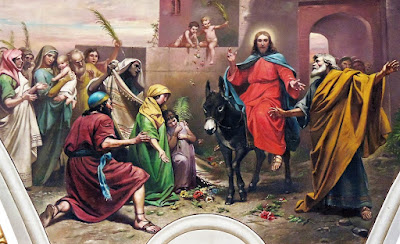
Palm Sunday is the Christian moveable feast that falls on the Sunday before Easter. The feast commemorates Christ's triumphal entry into Jerusalem, an event mentioned in each of the four canonical Gospels. Its name originates from the palm branches waved by the crowd to greet and honor Jesus Christ as he entered the city. Palm Sunday marks the first day of Holy Week; in Western Christianity, this is the beginning of the last week of the solemn season of Lent, preceding Eastertide, while in Eastern Christianity, Holy Week commences after the conclusion of Great Lent.
- type
- Christian moveable feast
- observed_by
- Orthodox, Catholic, Lutheran, Moravian, Reformed, Anglican, Methodist, and other
- date
- Sunday before Easter
- significance
- Commemorates Christ's triumphal entry into Jerusalem
- also_known_as
- Entry of the Lord into Jerusalem (in Eastern Christianity)
Lore & Background
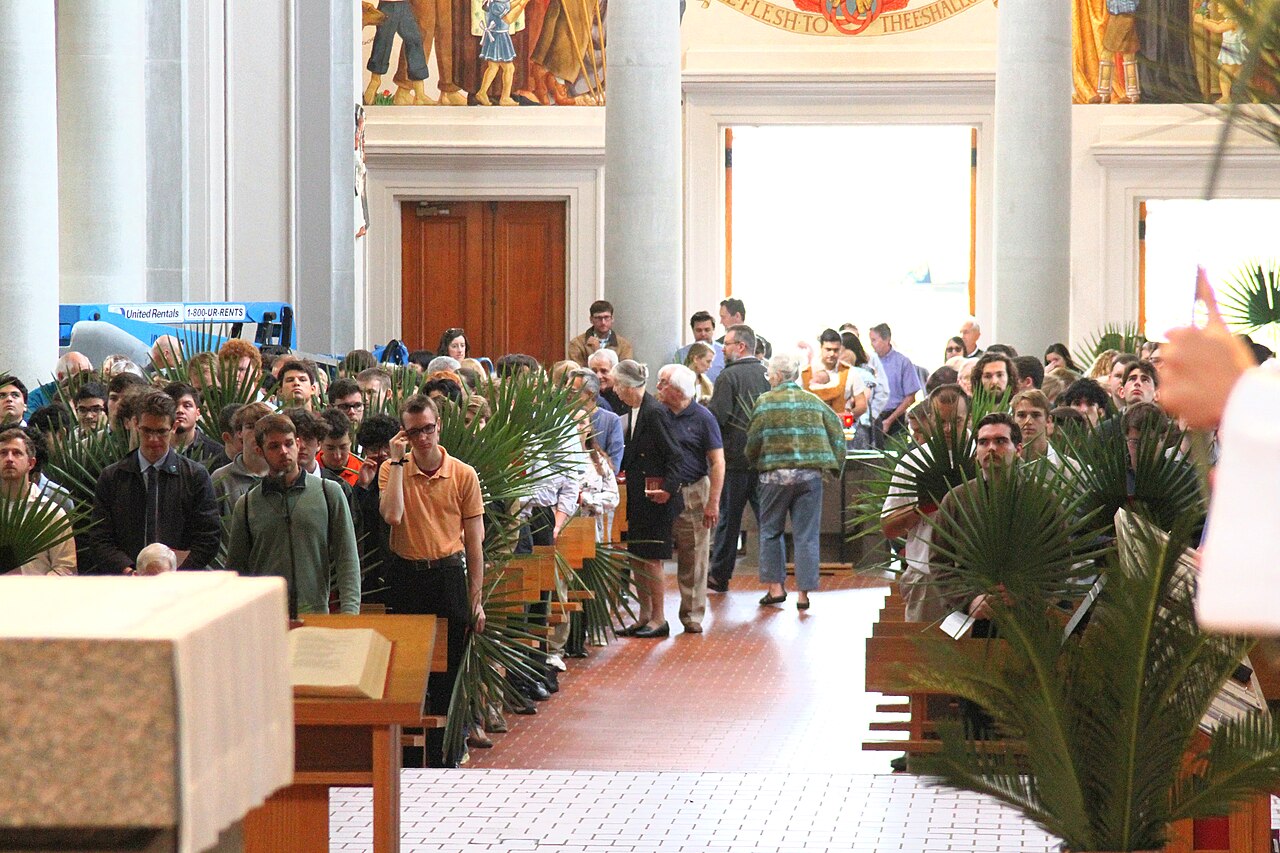
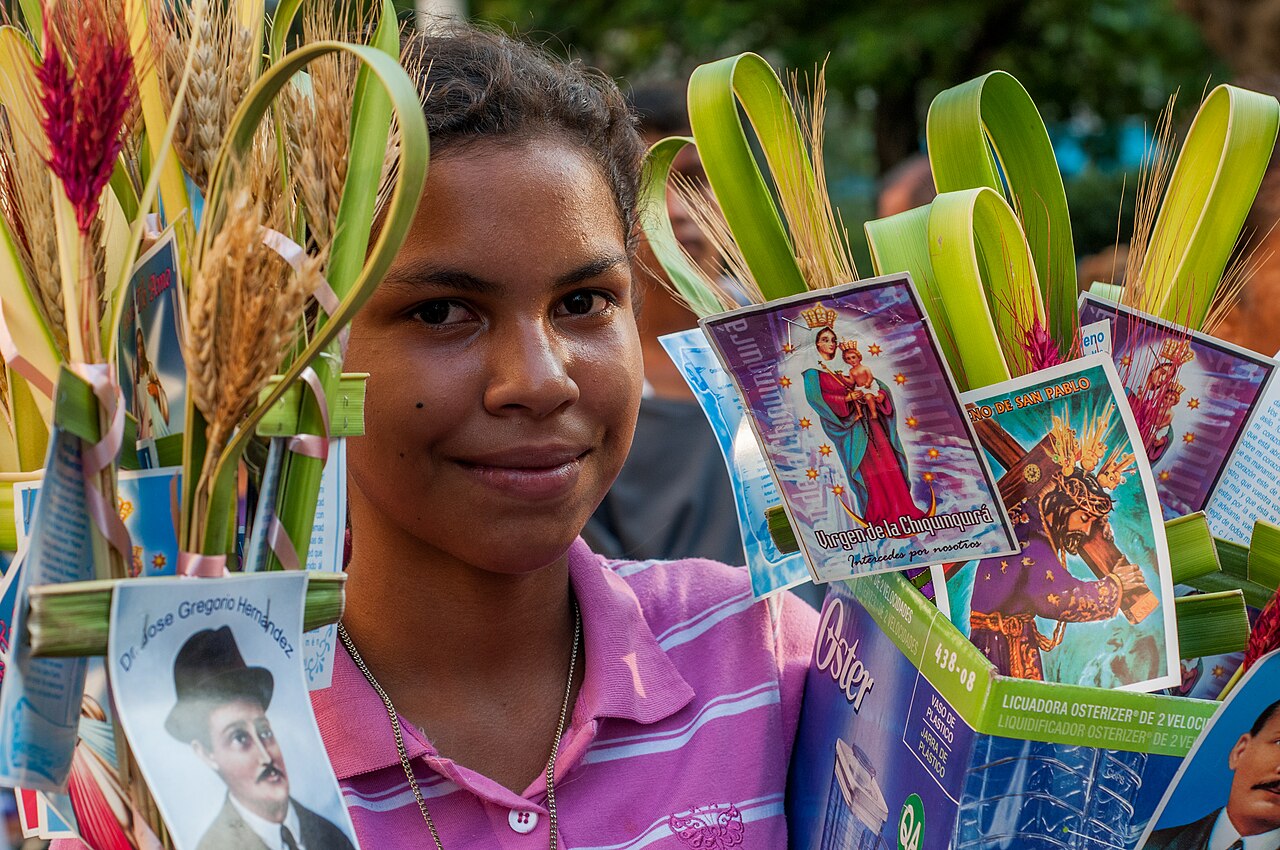
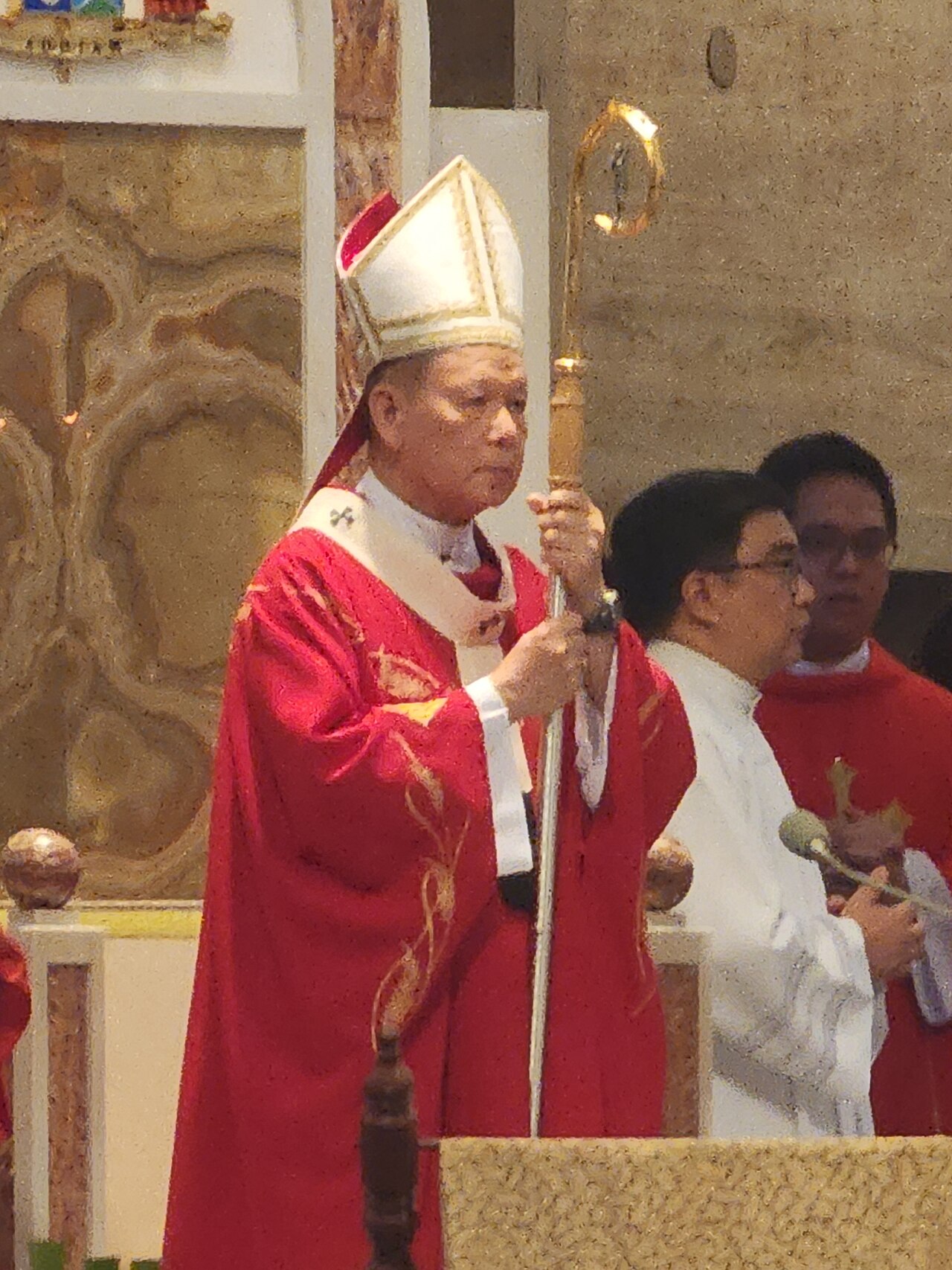
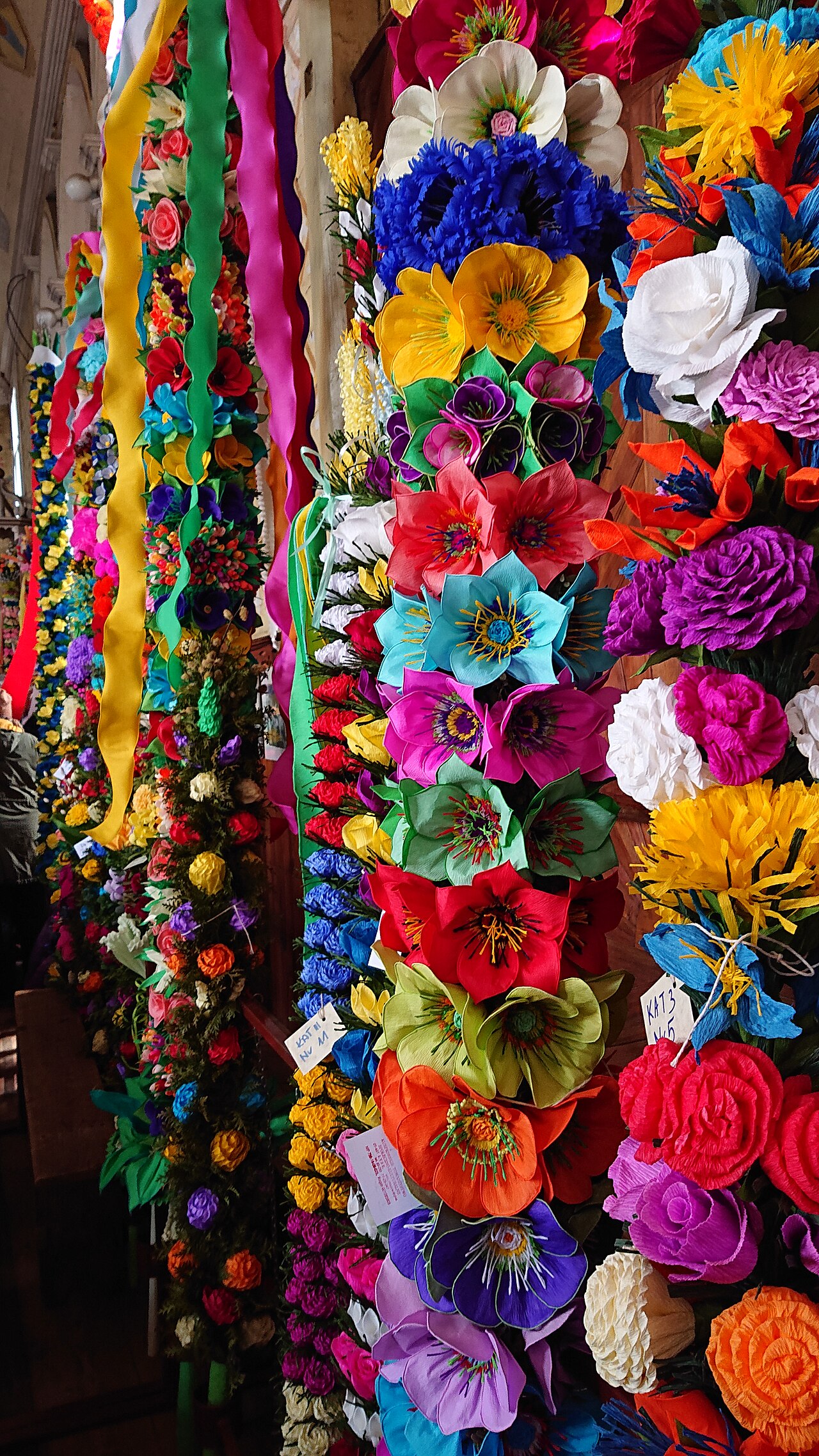
In most Christian rites, Palm Sunday is celebrated by the blessing and distribution of palm branches (or branches of other native trees), representing the palm branches that the crowd scattered before Christ as he rode into Jerusalem. These palms are sometimes woven into crosses. The difficulty of procuring palms in unfavorable climates led to the substitution of branches of native trees, including box, olive, willow, and yew. Many churches of mainstream Christian denominations, including the Orthodox, Catholic, Lutheran, Moravian, Reformed, Anglican and Methodist traditions, distribute palm branches to their congregations during their Palm Sunday liturgies. Christians take these palms, which are often blessed by clergy, to their homes, where they hang them alongside Christian art (especially crosses and crucifixes) or keep them in their Bibles and daily devotional books. In the days preceding the next year's Lent in Western Christianity, known as Carnival or Shrovetide, churches often place a basket in their narthex to collect these palms, which are then ritually burned on Shrove Tuesday to make the ashes to be used on the following day, Ash Wednesday, which is the first day of Lent. In Eastern Christianity, where Ash Wednesday is non-existent, it is typical to return the Palms the following Palm Sunday prior to receiving new Palms.
Reader's Guide
Palm Sunday holds significance as the beginning of Holy Week, the final week of Lent in Western Christianity, and the start of Holy Week after Great Lent in Eastern Christianity. The feast is rooted in the biblical accounts of Christ's entry into Jerusalem, where the crowd laid down cloaks and palm branches, singing part of Psalm 118: 25–26 – 'Blessed is He who comes in the name of the Lord. We bless you from the house of the Lord.' The symbolism of the donkey Jesus rode may refer to the Eastern tradition that it is an animal of peace, unlike the horse which is the animal of war, thus representing his entry as the Prince of Peace. In Western Christianity, palms collected from the previous year are often ritually burned on Shrove Tuesday to make ashes for Ash Wednesday. In Eastern Christianity, it is typical to return the palms the following Palm Sunday prior to receiving new ones. The feast is one of the Twelve Great Feasts in Orthodox Churches, and in many Eastern European traditions, pussy willow or other twigs are used instead of palm fronds. In the Russian Orthodox Church, Ukrainian Orthodox Church, Ukrainian Catholic Church, Eastern Lutheran Churches, Ruthenian Catholic Church, Polish, Bavarian and Austrian Roman Catholics, the custom developed of using pussy willow and other twigs like box tree instead of palm fronds because the latter are not readily available that far north.
Did You Know?
- The name 'Palm Sunday' originates from the palm branches waved by the crowd to greet Jesus as he entered Jerusalem, as mentioned in each of the four canonical Gospels.
- In Eastern Christianity, where Ash Wednesday is non-existent, it is typical to return the Palms the following Palm Sunday prior to receiving new Palms.
- In the Russian Orthodox Church, pussy willow and other twigs like box tree are used instead of palm fronds because the latter are not readily available that far north.
- In Russia, donkey walk processions took place in Novgorod and, from 1558 until 1693, in Moscow, where the Patriarch rode on a 'donkey' (a horse draped in white cloth) and the Tsar led the procession on foot.
- The Gospel of John dates Christ's triumphal entry six days before the Passover, and only John mentions the raising of Lazarus in the previous chapter.
The Gospel Narrative and the Donkey's Meaning
The triumphal entry into Jerusalem is recorded in all four canonical Gospels, placing it one week before the resurrection. John alone provides a precise date—six days before Passover—and links the event to the raising of Lazarus in the preceding chapter, a connection the Eastern Orthodox and Byzantine Rite churches honor through their separate Lazarus Saturday observance. Matthew explicitly ties the scene to Zechariah 9:9, presenting Jesus as fulfilling prophecy by arriving on a donkey's colt, a deliberate declaration of kingship. The Gospels describe the crowd scattering their cloaks and small tree branches along the road while singing from Psalm 118. The choice of a donkey carries layered symbolism: in Eastern tradition the animal signified peace, in contrast to the war-horse, so Christ's mount announced him as Prince of Peace rather than a conquering general. This dual reading—historical event and symbolic meaning—has shaped Christian interpretation for centuries. In Luke 19:41, Jesus weeps over Jerusalem as he approaches, foreshadowing both his Passion and the city's future destruction.
The Palm as a Cross-Cultural Symbol
The palm branch carries a remarkable history of meaning that predates and extends beyond Christianity. In the Greco-Roman world that shaped early Christian culture, the palm was the most common attribute of Nike or Victoria, the goddess of victory, and a Roman triumphator would display palm emblems on his civilian toga after laying down his arms. In Jewish tradition, the palm is one of the Four Species prescribed for rejoicing during Sukkot in Leviticus 23:40. Ancient Egyptian religion carried the palm in funeral processions as a sign of eternal life, a meaning that later migrated into Christian iconography as the martyr's palm, representing spiritual triumph over death. The Apostle Paul's Epistles refer to Jesus as triumphing, yet the Jerusalem entry was not regularly depicted as a formal triumphal procession in this Roman sense before the thirteenth century. In Revelation 7:9, a white-clad multitude before the throne holds palm branches, weaving together victory, worship, and eschatological hope into a single image that still resonates in Palm Sunday worship today.
Blessing, Distribution, and the Cycle of Ashes
In most Christian rites, the central act of Palm Sunday is the blessing and giving out of palm branches—or, where palms are unavailable, the twigs of native trees such as box, olive, willow, or yew. Congregants in Orthodox, Catholic, Lutheran, Moravian, Reformed, Anglican, and Methodist traditions receive these blessed branches and often weave them into crosses. At home, the palms are hung beside crosses and crucifixes or tucked into Bibles and devotional books. In Western Christianity, the palms enter a remarkable liturgical cycle: during the Carnival or Shrovetide days before the following Lent, churches set out baskets in their narthex to collect the previous year's palms. On Shrove Tuesday these are ritually burned to produce the ashes used on Ash Wednesday, the first day of Lent. Eastern Christianity, which has no Ash Wednesday, follows a different pattern: the faithful return their old palms the following Palm Sunday before receiving new ones. This practice binds the feast to the entire liturgical year in a tangible, physical way.
Eastern Orthodox and Eastern European Customs
In Orthodox and Oriental churches, Palm Sunday—often called the Entry of the Lord into Jerusalem—ranks among the Twelve Great Feasts of the liturgical year, giving it a stature that few other days possess. The observance begins the day before, on Lazarus Saturday, when believers prepare palm fronds by tying them into cross shapes for the Sunday procession. Church hangings and vestments shift to a festive color, most commonly green, signaling the joyful character of the feast. The Troparion of the Feast, a short hymn sung during the service, draws a theological thread between the resurrection of Lazarus and Christ's own Resurrection, presenting the former as a prefiguration of the latter. In the Russian Orthodox, Ukrainian Orthodox, Ukrainian Catholic, Eastern Lutheran, Ruthenian Catholic, and various Polish, Bavarian, and Austrian Roman Catholic communities, a distinctive local custom developed: because true palm fronds were unavailable in colder climates, the faithful substituted pussy willow and box tree twigs. This practical adaptation preserved the spirit of the rite while expressing a distinctly Eastern European identity within the broader Christian tradition.
Gallery

Frequently Asked Questions
What is Palm Sunday?
Palm Sunday is a Christian moveable feast that always lands on the Sunday immediately before Easter. It serves as the opening day of Holy Week in the liturgical calendar.
When is Palm Sunday?
Because it is tied to Easter rather than a fixed calendar date, Palm Sunday shifts each year and always falls on the Sunday directly preceding Easter.
Why is it called Palm Sunday?
The name comes from the palm branches the crowd waved to greet Jesus as he entered Jerusalem. Those branches symbolized the honor and triumph the people showed him on that occasion.
What event does Palm Sunday commemorate?
The feast recalls Christ's triumphal entry into Jerusalem, a scene recorded in all four of the canonical Gospels. It is observed across Orthodox, Catholic, Lutheran, Anglican, Methodist, and many other Christian traditions.
How does Palm Sunday fit into Holy Week and Lent?
In Western Christianity, Palm Sunday opens Holy Week, the final stretch of the Lenten season before Eastertide begins. In Eastern Christianity the feast is called the Entry of the Lord into Jerusalem and arrives after Great Lent has already concluded.
More in Public Holidays & Observances 1-24
Related in Public Holidays & Observances
Links follow this subject's own source article.
Elsewhere in the Public Holidays & Observances universe
Spotted an error? Know more?
This is a living reference — every entry is fact-audited, and reader corrections feed straight into our audit queue. Suggest an edit · See this site's audit record