New Year's Day
First day of the Gregorian calendar year, celebrated globally.

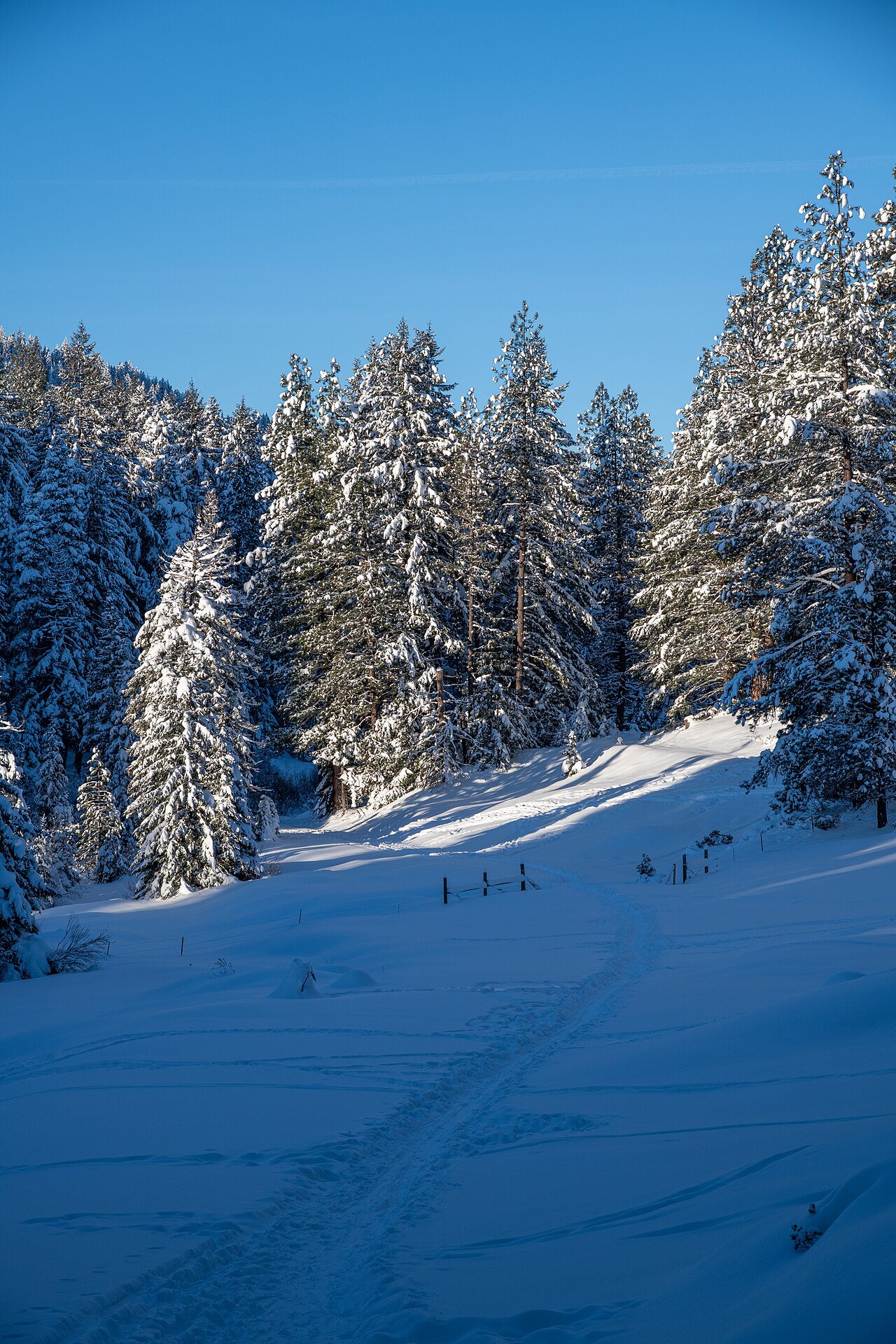
BLM Oregon & Washington · Public domain
New Year's Day, observed on 1 January in the Gregorian calendar, is the first day of the calendar year and one of the most widely celebrated public holidays globally. Its origins trace back to ancient Roman traditions, including the dedication of the day to Janus, the god of gateways and beginnings, and its establishment as the start of the civil year in 153 BC.
- observed
- 1 January (Gregorian calendar)
- origin
- Ancient Rome (pre-Christian)
- associated_deity
- Janus (god of gateways and beginnings)
- historical_start_dates
- 25 December, 1 March, 25 March, movable Easter
- common_traditions
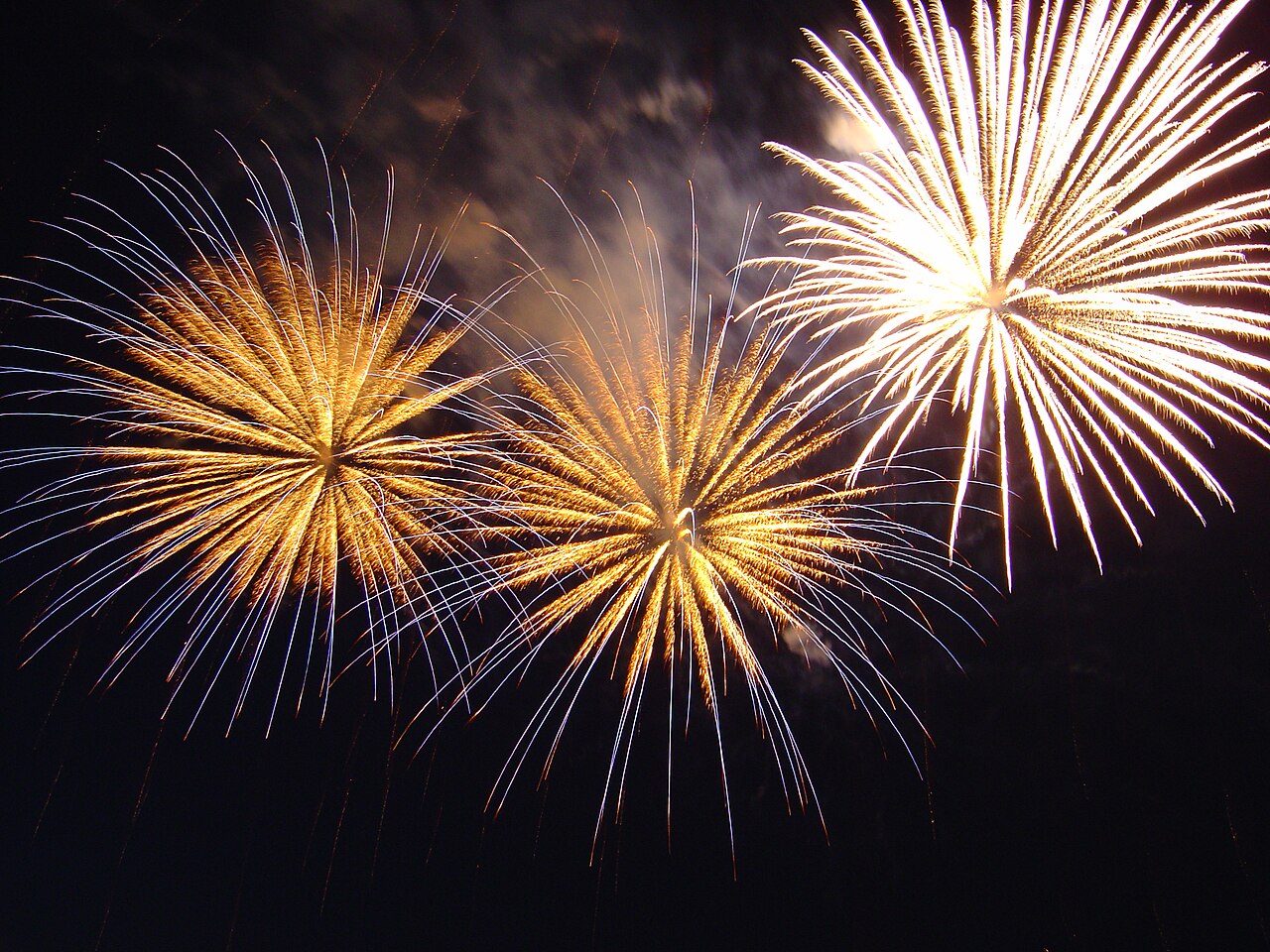
- Fireworks, New Year's resolutions, calling friends and family
Lore & Background
The ancient Babylonian calendar was lunisolar, and around the year 2000 BC began observing a spring festival and the new year during the month of Nisan, around the time of the March equinox. The early Roman calendar designated 1 March as the first day of the year. The January kalends came to be celebrated as the new year at some point after it became the day for inaugurating new consuls in 153 BC as a result of the rebellion in Hispania which began the second Celtiberian War. The Julian calendar, proposed by Julius Caesar in 46 BC, took effect on 1 January 45 BC by edict and retained 1 January as the start of the year. However, local calendars varied: the Alexandrian calendar in Egypt started on 29 August (30 August after an Alexandrian leap year), and the indiction caused the Byzantine year to begin on 1 September. In pre-Christian Rome, under the Julian calendar, the day was dedicated to Janus, god of gateways and beginnings, for whom January is also named.
Reader's Guide
From Roman times until the mid-18th century, the new year was celebrated at various stages and in various parts of Christian Europe on 25 December, on 1 March, on 25 March and on the movable feast of Easter. Most nations of Europe and their colonies officially adopted 1 January as New Year's Day somewhat before they adopted the Gregorian calendar: most of Germany changed to 1 January from 1544, the Netherlands from 1556 or 1573 according to sect, Spain and Portugal from 1556, France from 1564, Sweden, Norway and Denmark from 1599, Scotland from 1600, and Russia from 1700 or 1725. England, Wales, Ireland, and Britain's American colonies adopted 1 January as New Year's Day from 1752. In the present day, with most countries now using the Gregorian calendar as their civil calendar, 1 January is often observed with fireworks at the stroke of midnight following New Year's Eve, as the new year starts in each time zone. Other global New Year's Day traditions include making New Year's resolutions and calling one's friends and family. Christians of various denominations often attend a watchnight service on the night of New Year's Eve, which concludes in the morning of New Year's Day, providing the opportunity to review the year that has passed and make confession, and then prepare for the year ahead by praying and resolving. In Tudor England, 1 January (as the Feast of the Circumcision, not New Year's Day), along with Christmas Day and Twelfth Night, was celebrated as one of three main festivities among the twelve days of Christmastide, and gift-giving was customary at the royal court.
Did You Know?
- The early Roman calendar had just 10 months, beginning with March; September through December were originally the seventh through tenth months (Septem is Latin for 'seven', octo for 'eight', novem for 'nine', and decem for 'ten').
- A series of disasters, notably including the failed rebellion of M. Aemilius Lepidus in 78 BC, established a superstition against allowing Rome's market days to fall on the kalends of January.
- Among 7th-century pagans of Flanders and the Netherlands, it was the custom to exchange gifts at the winter solstice, a practice deplored by Saint Eligius (died 659 or 660).
- In the Gwaun Valley in Wales, the new year is celebrated on 13 January, still based on the 19th century difference in the calendars.
- Foula, in the Shetland islands, celebrates Yule on 6 January and Newerday on 13 January, reflecting the 19th century reckoning.
New Year's Day and the Christmas Season in Argentine Homes
In Argentine culture, the transition into the new year is inseparable from the broader winter holiday season that centers on family togetherness. On Christmas Eve, the extended family typically assembles around 9 p.m. for a shared dinner accompanied by music and, in many households, dancing. As the clock approaches midnight, candies are distributed to everyone gathered, and the moment is punctuated by the ignition of fireworks. New Year's Day carries its own fireworks display, extending the celebratory energy well into January. While Argentina's public holiday calendar draws heavily from the Catholic tradition, the country also acknowledges observances of many other faiths, and federal non-working days exist specifically to accommodate workers of particular religious communities. The result is a holiday landscape where the new year arrives not as a solitary event but as the culmination of a week-long rhythm of feasting, gathering, and communal celebration.
The Architecture of Argentine Public Holidays
Argentina's holiday system is governed by a clear set of rules that shape how workers experience the calendar. Every employee is guaranteed fifteen paid public holidays each year, and the government periodically designates additional bridge holidays that extend a single day off into a two-day break, effectively stitching together weekends and midweek rest. Movable holidays—those whose dates shift from year to year—follow a specific adjustment protocol: if such a holiday falls on a Tuesday or Wednesday, it is pulled forward to the preceding Monday; if it lands on a Thursday, Friday, Saturday, or Sunday, it is pushed to the following Monday. This mechanism ensures that no worker loses a full weekend to a midweek observance. Beyond the standard calendar, the country also maintains federal non-working days tied to national or religious observances, during which individuals of certain faiths are formally excused from their duties. The overall design reflects a balance between religious tradition, labor rights, and practical scheduling.
Bicentennial: One-Time Holidays Marking Two Centuries of Independence
To commemorate the two-hundredth anniversary of Argentina's path to sovereignty, the government arranged a series of extraordinary, one-time holidays spanning several years. On February 27, 2012, the nation marked the bicentenary of the creation of the Argentine flag and the first public pledge to it. September 24, 2012, honored the bicentenary of the Battle of Tucumán, a pivotal military engagement in the independence struggle. February 20, 2013, commemorated the bicentenary of the Battle of Salta, another critical victory in the war for independence. These singular days of rest underscored how the nation chose to distribute its collective memory across multiple years rather than compressing it into a single anniversary.
Observances That Shape Daily Argentine Life
Beyond the formal public holiday calendar, Argentina recognizes a rich tapestry of cultural observances that, while not granting a day off from work, carry significant social weight. National Anthem Day falls on May 11, and the period of May 18 through 24 is known as May Week, honoring the historic revolution. Loyalty Day on October 17 recalls both the 1945 Peronist rally and the first television broadcasts of 1951. Tradition Day on November 10 marks the 1834 birth of poet José Hernández.
Gallery


Frequently Asked Questions
Who is New Year's Day?
New Year's Day is the opening chapter of the Gregorian calendar year, falling on 1 January. It marks the very first day of the new year and is recognized as a public holiday in the vast majority of countries worldwide.
What are New Year's Day's powers/role?
Its main 'abilities' include kicking off fireworks displays, prompting people to set New Year's resolutions, and serving as a reason to call friends and family. It essentially resets the cultural clock for the entire year ahead.
How does New Year's Day's story end?
The day typically wraps up with lingering celebrations, hangovers from the night before, and a collective sense of fresh starts. By the time 1 January closes, the momentum of resolutions and festivities carries people into the rest of the year.
Why is New Year's Day important?
It holds a unique position as the single most universally observed day on the calendar, bridging cultures and religions alike. Its roots stretch back to ancient Rome, where the day was dedicated to Janus, the two-faced god of gateways and new beginnings.
What's New Year's Day's origin story?
Before landing on 1 January, the start of the Roman civil year shifted multiple times—25 December, 1 March, 25 March, and even a date tied to Easter. The date was finally fixed to 1 January in 153 BC, a tradition that eventually became the global standard.
More in Public Holidays & Observances 1-24
Related in Public Holidays & Observances
Links follow this subject's own source article.
Elsewhere in the Public Holidays & Observances universe
Spotted an error? Know more?
This is a living reference — every entry is fact-audited, and reader corrections feed straight into our audit queue. Suggest an edit · See this site's audit record