Public holiday
A legally established non-working day observed by a nation.

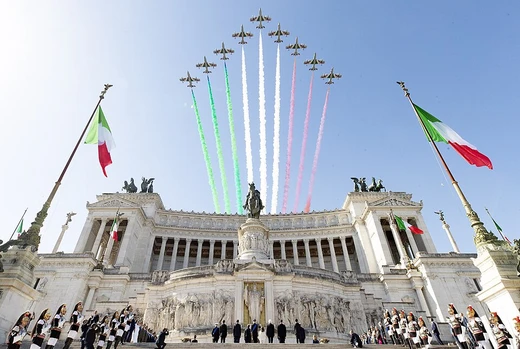
A public holiday, also known as a national holiday, federal holiday, statutory holiday, bank holiday, or legal holiday, is a day generally established by law and is usually a non-working day during the year. Such holidays are typically declared by a legislature, parliament, congress, or sovereign through statute, edict, or decree, and often result in the closure of official government arms such as the court system. Public holidays serve to coordinate leisure time, foster national unity, and act as sites of memory that preserve particular representations of historical events and national heroes.
- definition
- A non-working day established by law
- types
- Civic holiday, bank holiday, common law holiday
- highest_count
- Nepal with 36 days a year
- second_highest
- India with 21 national holidays
- common_variation
- May differ by country, year, or subnational jurisdiction
- controversial_examples
- Columbus Day and Australia Day
Lore & Background
Public holidays are established by law and can be categorized into several types. A civic holiday, also called a civil holiday or work holiday, is legally recognized in a particular sovereign state or subdivision, such as a state or province. In federal states, constituent states may have different holidays; for example, in the United States, holidays established by the federal government are called federal holidays. Such days may or may not affect the statute of limitations in legal actions and are often used in parenting schedules for non-custodial parents. The term can also distinguish secular holidays from religious ones, such as New Year's Day celebrated on different dates in some Eastern Orthodox countries.
Reader's Guide
Public holidays play a significant role in nation building and social coordination. They provide annual opportunities for national governments to reinforce the status of the nation and foster national unity, social cohesion, and popular identification. Sabine Marschall argues that public holidays can be regarded as sites of memory, preserving particular representations of historical events and national heroes. The coordination of leisure time through public holidays has both costs, such as congestion and overcrowding, and benefits, such as making it easier for people to arrange social occasions. Some public holidays are controversial; for instance, Columbus Day in the United States has led to protests and calls for change, with some states adopting Indigenous People's Day instead. Similarly, Australia Day has drawn protests from those who see it as a symbol of European oppression, leading to the nickname 'Invasion Day' and the relocation of some associated events.
Did You Know?
- Nepal has the highest number of public holidays with 36 days a year, though it observes a six-day working week.
- In the United States, there is no national law requiring employers to pay employees who do not work on public holidays, except in Rhode Island and Massachusetts.
- In New Zealand, workers on a public holiday are paid 1.5 times their regular rate and given an alternate day off.
- Australia Day has been nicknamed 'Invasion Day' due to protests over its commemoration of the First Fleet's arrival.
Frequently Asked Questions
What exactly is a public holiday?
A public holiday is a day officially designated by law as a non-working day, typically established through a statute, edict, or decree issued by a legislature, parliament, congress, or sovereign. It goes by many names—national holiday, federal holiday, statutory holiday, bank holiday, or legal holiday—depending on the country and context.
Which country has the most public holidays?
Nepal tops the list with 36 public holidays per year, followed closely by India at 21 national holidays. The exact count varies widely from one nation to another and can even shift year to year or across subnational jurisdictions within a single country.
Who has the authority to create or cancel a public holiday?
Public holidays are generally declared by a governing body such as a legislature, parliament, congress, or a sovereign acting through statute, edict, or decree. Because of this legal origin, they carry the force of law and can trigger the closure of official institutions like courts and government offices.
What purpose do public holidays serve beyond just a day off?
They coordinate shared leisure time, reinforce a sense of national unity, and function as sites of collective memory that keep particular historical events and national heroes in public consciousness. In short, they blend practical rest with cultural and political significance.
Are there public holidays that spark controversy?
Yes—examples like Columbus Day and Australia Day regularly draw criticism because the events or figures they commemorate are viewed by some groups as celebrating colonialism or dispossession. These debates highlight how a holiday's meaning can be contested even when its legal status is settled.
More in Public Holidays & Observances 1-24
Elsewhere in the Public Holidays & Observances universe
Spotted an error? Know more?
This is a living reference — every entry is fact-audited, and reader corrections feed straight into our audit queue. Suggest an edit · See this site's audit record